
Standard’s counters-matter machine just posted its best result of the week. Selesnya Ouroboroid — the Forest/Plains pile that turns cheap dorks and combat triggers into an avalanche of +1/+1 counters — took down a 32-player Standard Challenge on July 2nd behind pilot PedraStone, going 7-2 and outlasting a field packed with Izzet Prowess and Jeskai Lessons. If you’ve been looking for a proactive, creature-based strategy that punishes anyone trying to interact with your board, this is the week to build it.
Why This Deck Is Surging
Selesnya Ouroboroid isn’t a new archetype, but it’s been quietly climbing the metagame as players lean into “counters matter” synergies from across the last year of Standard sets. The gameplan is simple to say and brutal to play against: flood the board with cheap creatures that punish targeted removal, then dump a payoff like Ouroboroid or Practiced Offense to snowball every creature into a real threat in a single turn. PedraStone’s list leaned hard into that plan and cut through the tournament with room to spare.
The Decklist
Standard Challenge 32, July 2, 2026 — 1st Place (7-2), piloted by PedraStone
Creatures & Spells (38)
4 Llanowar Elves
4 Pawpatch Recruit
4 Badgermole Cub
2 Jennifer Walters
2 Ouroboroid
3 Surrak, Elusive Hunter
4 Brightglass Gearhulk
4 Leatherhead, Swamp Stalker
3 Spider Manifestation
4 Practiced Offense
2 Seam Rip
1 Meltstrider’s Resolve
1 Bushwhack
Lands (22)
6 Forest
2 Plains
2 Multiversal Passage
4 Hushwood Verge
4 Temple Garden
3 Abandoned Air Temple
1 Ba Sing Se
Sideboard (15)
2 Erode
2 Elspeth, Storm Slayer
3 Dawn’s Truce
1 Meltstrider’s Resolve
3 Rest in Peace
1 Soul-Guide Lantern
3 Sheltered by Ghosts
Key Card Breakdown
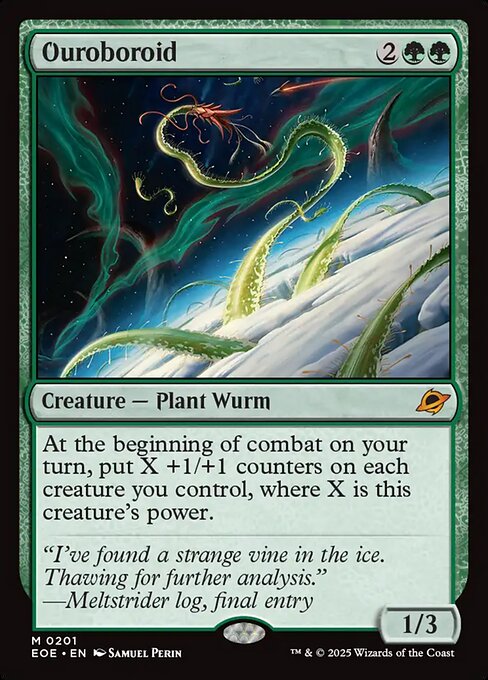
Ouroboroid is the namesake payoff and the reason this deck can win out of nowhere. At the beginning of combat, it puts X +1/+1 counters on every creature you control, where X is its own power. Because Ouroboroid itself grows from any counters it picks up, a single copy resolving into an already-developed board can turn a group of 2/2s into a lethal swing on the spot. Two copies mean the deck almost never runs out of gas.
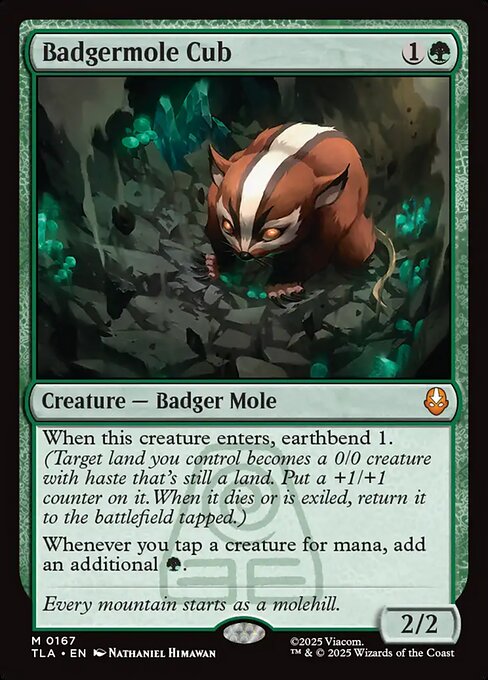
Badgermole Cub is the deck’s premier one-two punch: it earthbends a land into a hasty 0/0 with a counter on entry, then taxes every future mana tap for an extra green. That’s both a free body and a mana engine, and it’s the reason this list can consistently reach its four-and-five-drops on curve.
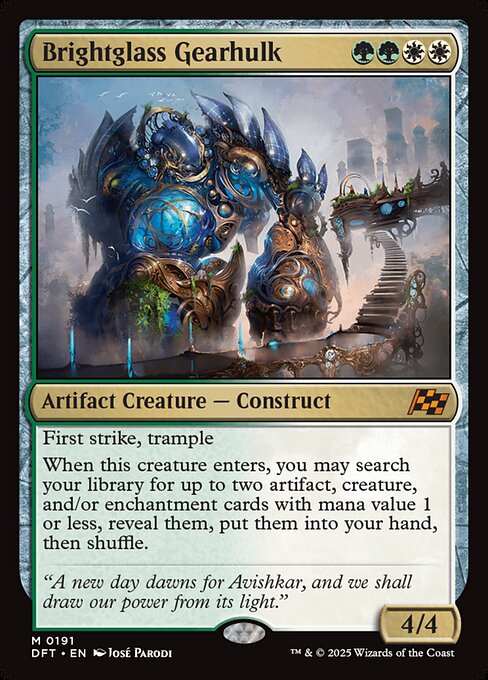
Brightglass Gearhulk is the top-end value creature, a 4/4 first strike/trample body that digs two cheap permanents straight into your hand when it lands. In a deck full of one-and-two-mana synergy pieces, tutoring up exactly what you need makes every copy feel custom-built for the matchup.

Practiced Offense is the other counters payoff, dropping a +1/+1 counter on every creature you control while handing one attacker double strike or lifelink for the turn — and it does it twice, thanks to flashback. It’s the card most likely to end games out of an alpha strike, especially once Ouroboroid has already inflated the board.
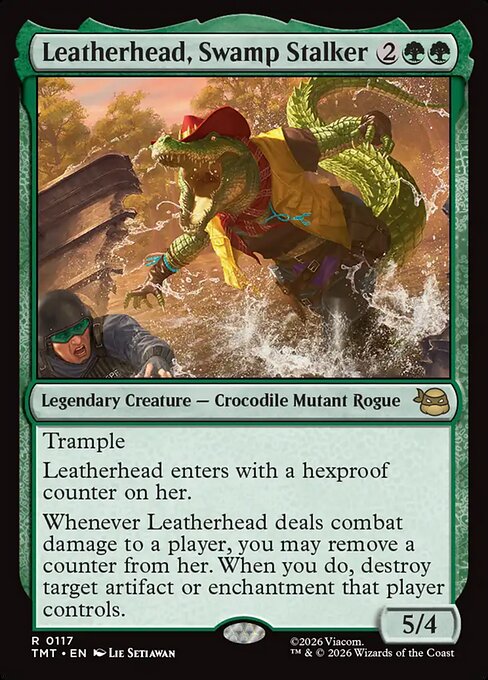
Leatherhead, Swamp Stalker rounds out the top of the curve as a 5/4 trampler that enters hexproof and blows up an artifact or enchantment every time it connects — a real answer to the sideboard hate this deck expects to see once it’s on people’s radar.
How to Play It
Mulligan for a one- or two-drop and a way to keep the board growing — Llanowar Elves and Pawpatch Recruit both want to hit the table on turn one so Badgermole Cub and the four-drops arrive ahead of schedule. Once you’re past turn three, sequence your counters payoffs to hit the widest board possible; Ouroboroid rewards you for waiting an extra turn if it means doubling the number of creatures it can pump. Against removal-heavy decks, Pawpatch Recruit and Surrak both punish targeted spells by handing out extra counters or cards, so don’t be afraid to play into removal rather than around it.
Against control, the sideboard plan leans on Elspeth, Storm Slayer and Dawn’s Truce to stabilize a board that gets swept, while Rest in Peace and Soul-Guide Lantern come in against the graveyard strategies still floating around Standard. This is a deck that wants to keep casting creatures no matter what’s on the other side of the table — the moment it gets to turn its board sideways, most opponents just aren’t ready for the math.
Want more breakdowns like this one? Follow Mana Riot Games on Facebook, Instagram, and TikTok for weekly deck techs across Magic, Riftbound, Gundam TCG, Sorcery, Flesh and Blood, and Star Wars Unlimited — and check back on the site every week for the full rundown.