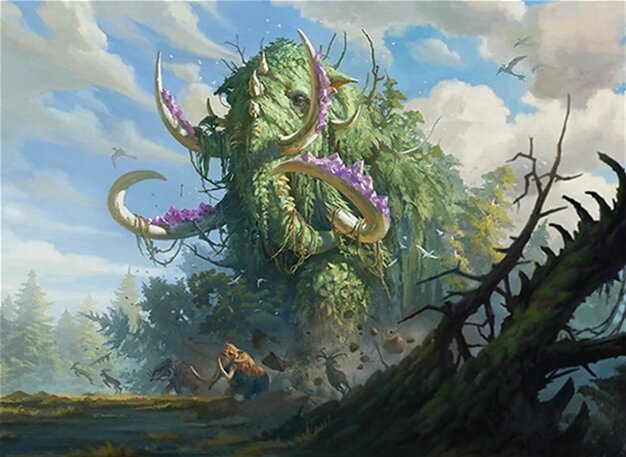
Tournament: Champions Cup Final, Kyoto, Japan — March 14, 2026
Player: Ma Noah (South Korea)
Result: 🏆 1st Place
Sometimes a tournament result just feels inevitable in hindsight. Ma Noah, a Pro Tour veteran with a Top 8 at Pro Tour Modern Horizons 3 to his name, piloted Bant Rhythm to a clean victory at Champions Cup Final Kyoto — Japan and South Korea’s prestigious Regional Championship. He defeated Tase Yuya’s Momo White deck in the finals to claim the title.
Bant Rhythm is the kind of deck that rewards tight play and deep format knowledge. It blends Green’s explosive ramp package with a tutor engine built around one of Tarkir: Dragonstorm‘s most powerful new tools — and it closes games with one of the most iconic finishers in all of Magic.
The Engine: Nature’s Rhythm

The deck takes its name from Nature’s Rhythm — a Tarkir: Dragonstorm sorcery that reads {X}{G}{G}: Search your library for a creature card with mana value X or less, put it onto the battlefield, then shuffle. That alone would be worth the price of admission. But Nature’s Rhythm also has Harmonize — a new keyword that lets you recast the spell from your graveyard by tapping your own creatures to reduce the generic cost.
In practice, this means that once you’ve cast Nature’s Rhythm once, your board of mana creatures becomes a second casting of the spell. Tapping a Llanowar Elves or a Gene Pollinator reduces the Harmonize cost, letting you chain creature after creature onto the battlefield. This is the engine that makes the deck tick.
The Ramp Package
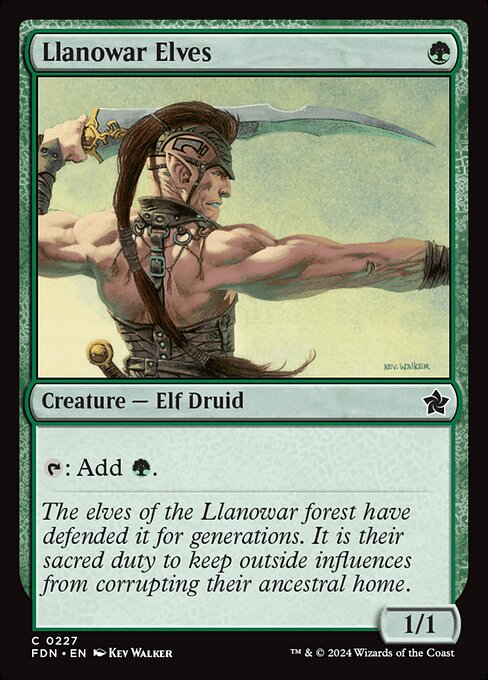
The deck runs a full playset of Llanowar Elves — the one-mana dork that has been warping Standard formats for decades. Alongside four copies of Badgermole Cub and four Gene Pollinator, the deck can regularly land a Nature’s Rhythm on turn two or three. The ramp creatures also double as Harmonize fuel, turning them from acceleration into tutoring mana as the game progresses.
The Toolbox: Brightglass Gearhulk
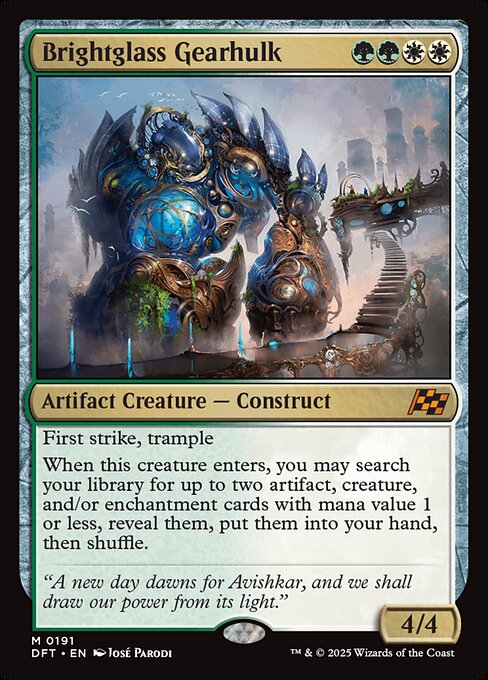
Brightglass Gearhulk is a four-mana 4/4 with first strike and trample that, when it enters the battlefield, searches your library for up to two artifact, creature, or enchantment cards with mana value 1 or less and puts them into your hand. In Bant Rhythm, this mainly means fetching two copies of Llanowar Elves — instantly refilling your ramp package and setting up future Harmonize activations. Ma Noah included a single copy of Unable to Scream specifically to expand the options available when Gearhulk enters, giving the deck extra flexibility against problematic permanents.
The Flex Slots: Quantum Riddler & Mockingbird
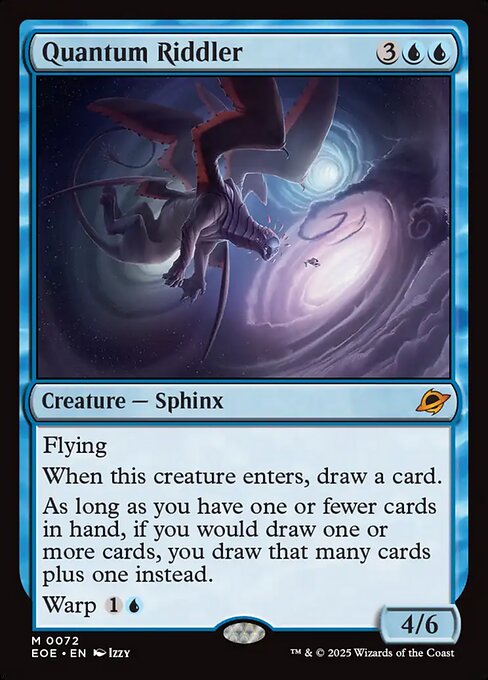
The Blue splash is doing real work. Quantum Riddler — a 4/6 flying Sphinx at five mana — draws a card when it enters and then provides extra card draw whenever you’re running low. Its Warp ability lets you cast it from your hand for an alternate cost, giving the deck a surprise threat. Meanwhile, Mockingbird is a deceptively powerful clone effect: for {X}{U}, this 1/1 bird enters as a copy of any creature on the battlefield with mana value X or less. In a deck that routinely has multiple large creatures in play, Mockingbird clones a Craterhoof for a lethal swing or copies a Brightglass Gearhulk for yet another search trigger.
The Win Condition: Craterhoof Behemoth
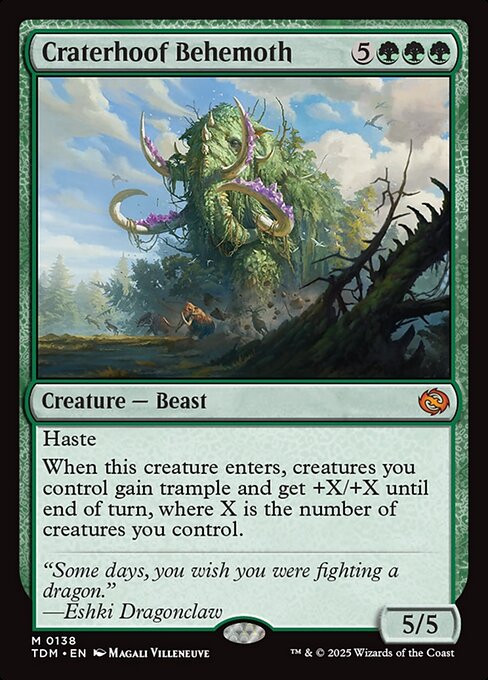
It all comes together when Craterhoof Behemoth hits the battlefield. The eight-mana 5/5 with haste gives every creature you control +X/+X and trample, where X equals the number of creatures you control. After a few turns of chaining Nature’s Rhythm triggers, you’re likely attacking with five to eight creatures, each of them suddenly enormous. Most opponents cannot survive a Craterhoof trigger. It’s one of Magic’s most satisfying “I win” moments — and Nature’s Rhythm ensures you can find it consistently.
Full Decklist — Bant Rhythm (Ma Noah, 1st Place Champions Cup Final Kyoto)
Mainboard (60)
Creatures (25)
4 Llanowar Elves
4 Badgermole Cub
4 Gene Pollinator
4 Spider Manifestation
2 Brightglass Gearhulk
2 Ouroboroid
4 Quantum Riddler
1 Craterhoof Behemoth
Spells (12)
4 Nature’s Rhythm
4 Multiversal Passage
3 Seam Rip
1 Unable to Scream
Other (1)
1 Keen-Eyed Curator
3 Mockingbird
Lands (22)
4 Starting Town
4 Temple Garden
4 Breeding Pool
1 Hallowed Fountain
4 Hushwood Verge
1 Meltstrider’s Resolve
4 [Basic Forests / Fetches]
Sideboard (15)
3 Sage of the Skies
2 Oko, Lorwyn Liege
2 Spider-Sense
1 Beza, the Bounding Spring
1 Disdainful Stroke
1 Unable to Scream
1 Soul-Guide Lantern
1 Focus Fire
2 Rest in Peace
1 Insidious Fungus
Key Matchup Tips
vs. Aggro (Momo White, Boros): Bring in Sage of the Skies for blocking and Beza to stabilize. Seam Rip in the main can handle early threats.
vs. Control: Oko, Lorwyn Liege provides a resilient threat that’s hard to answer at instant speed. Disdainful Stroke tags their sweepers and counterspells.
vs. Graveyard decks: Rest in Peace out of the board is your answer. Soul-Guide Lantern handles spot removal if they’re using the yard more selectively.
Why Did This Deck Win?
In a metagame full of aggressive strategies like Momo White and Boros Aggro, Bant Rhythm offers a proactive game plan that simply goes over the top. The combination of early ramp and a tutor engine means the deck is extremely consistent — you rarely flood out, and you always have a line to a Craterhoof finish.
The Harmonize mechanic on Nature’s Rhythm is particularly clever in this shell. Most ramp decks suffer when their early plays are removed, leaving them with useless copies of the spell in hand. Bant Rhythm turns that weakness into a strength: the more creatures you deploy, the more fuel you have to recast Nature’s Rhythm from the graveyard. Removal-heavy opponents essentially help you cycle through your deck faster.
Ma Noah’s decision to include a singleton Keen-Eyed Curator and a single Unable to Scream shows the kind of fine-tuning that separates good players from tournament winners. The deck is tight, well-positioned, and in skilled hands, nearly unstoppable.
Should You Play Bant Rhythm?
If you enjoy proactive, creature-based strategies that reward sequencing and preparation, Bant Rhythm is an excellent choice. It punishes unprepared opponents, scales well into the late game, and has the most satisfying win condition in Standard right now. The sideboard is well-rounded for the current metagame, handling aggro, control, and graveyard strategies alike.
The deck does ask you to understand your mana curve and Harmonize timing deeply — mistiming a Nature’s Rhythm recast can cost you the game. But for players willing to put in the reps, this is a proven Regional Championship-level deck.
🃏 Want to build Bant Rhythm? Come visit us at Mana Riot Games — we stock the latest Tarkir: Dragonstorm singles including Nature’s Rhythm, and our team can help you track down everything you need for this deck. Stop by the store or check out our online inventory, and let’s get you sleeving up a Regional-winning list!